
Yes, you can use RSUs and company stock toward a down payment in Silicon Valley, and many of our tech buyers do. The key is planning ahead: when you sell, how it's taxed, and how your lender documents the funds all affect your purchase. In Santa Clara County, a 20% down payment on a $1.8M home is $360,000. For many buyers at Apple, Google, Nvidia, Meta and other local companies, vested stock is the largest piece of that number. Here's how to use it without surprises.
How Lenders Look at RSUS
Lenders treat RSUs in two different ways: as assets for your down payment, and sometimes as income to help you qualify for the loan.
- Vested shares count; unvested shares don't. Only shares you own outright can be used as down payment funds.
- Unsold stock may be discounted. If you keep the shares in your brokerage account, many lenders count only part of the value because stock prices move. Selling and moving the cash gives you a clear, full number.
- RSU income can help you qualify. Some lenders will count RSU income if you have a consistent vesting history (often about two years) and continued vesting ahead. Not every lender does this well, so ask early.
- Funds need a paper trail. Expect to show brokerage statements, the sale confirmation, and the transfer into your bank account.
Selling Stock for Your Down Payment: Taxes and Timing
RSUs are taxed as ordinary income when they vest, and your employer usually withholds some shares for taxes at that point. When you later sell, you pay tax only on the gain (or deduct the loss) since the vest date.
- Shares held under a year are taxed at short-term rates on any gain. Shares held over a year get long-term federal rates. California taxes both as regular income.
- Default withholding is often too low for high earners in California. A large vest or sale can mean a bigger tax bill in April, so set that money aside before you calculate your down payment.
- Sell early enough for the funds to settle and season. Move the cash into your bank account at least a few weeks before you write offers, so it shows on statements your lender reviews.
- Watch trading windows. If your company has blackout periods, plan your sale around them so you aren't stuck mid-escrow.
Talk with a CPA before a large sale. They can help you choose which lots to sell to manage your tax bill.
Common Mistakes Tech Buyers Make
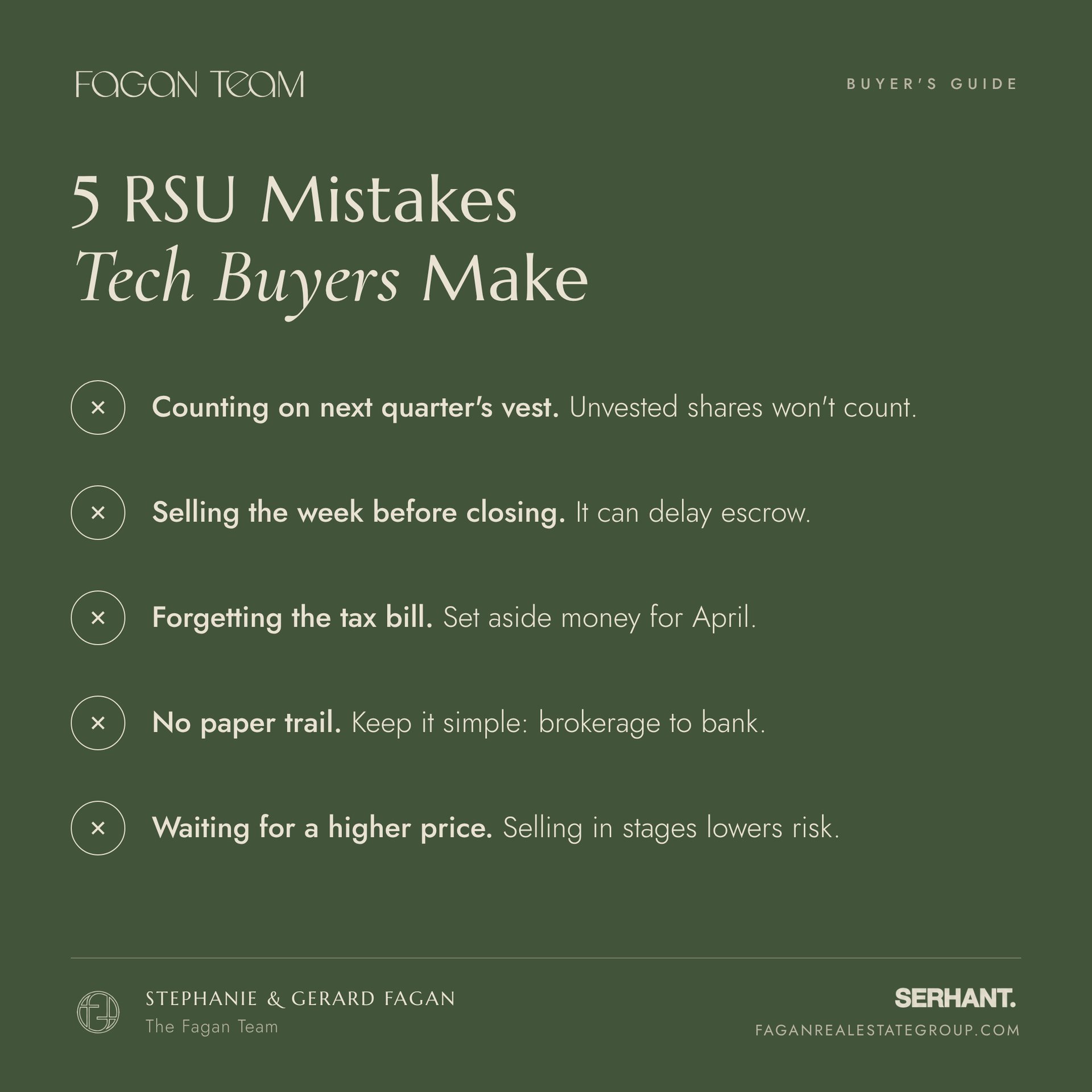
- Counting on next quarter's vest. If the shares haven't vested by the time your lender verifies funds, they won't count.
- Selling the week before closing. A last-minute sale can delay escrow while funds settle and get documented.
- Forgetting the tax bill. Spending your whole sale on the down payment can leave you short in April.
- Moving money around without a trail. Transfers between several accounts make underwriting slower. Keep the path simple: brokerage to bank.
- Waiting to sell in a falling market. Holding out for a higher price can shrink your budget right when you're ready to buy. Many buyers sell in stages to reduce that risk.
Step-by-Step: Using RSUs to Buy a Home
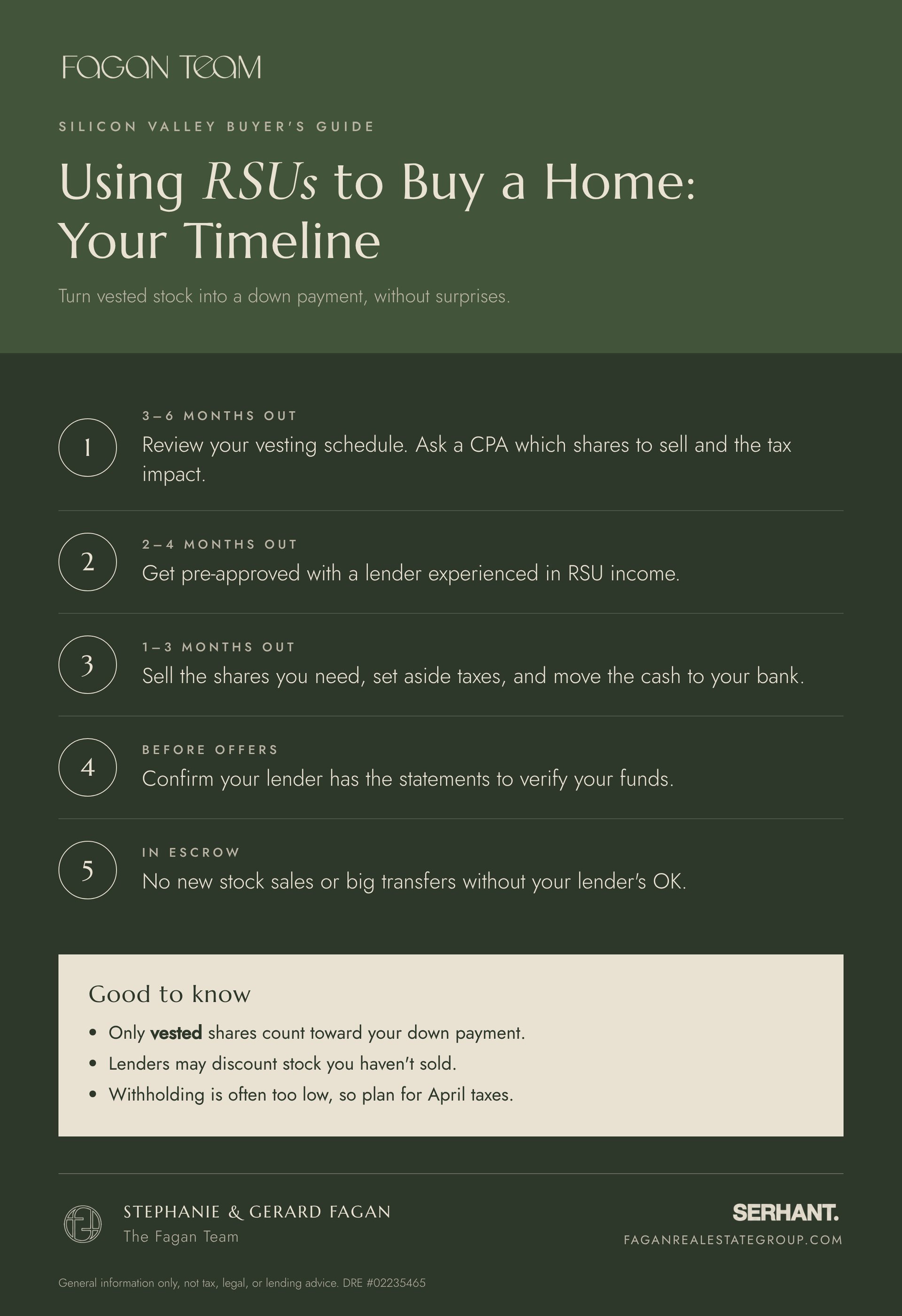
- 3-6 months out: Review your vesting schedule and talk to a CPA about which shares to sell and the tax impact.
- 2-4 months out: Meet a lender experienced with RSU income and get pre-approved. Ask how they'll count your stock.
- 1-3 months out: Sell the shares you need, set aside taxes, and transfer the cash to your bank account.
- Before writing offers: Confirm your lender has the statements they need so your funds are verified.
- In escrow: Avoid new stock sales or large transfers unless your lender approves them first.
Frequently Asked Questions
Can I use unvested RSUs for a down payment?
No. Only vested shares you can sell count toward your down payment.
Do I have to sell my stock before buying?
Not always, but selling usually makes the process simpler. Lenders often discount unsold stock because its value can change.
Can RSU income help me qualify for a bigger loan?
Often, yes, if you have a steady vesting history and future vests scheduled. Ask your lender how they calculate it.
How long before buying should I sell my RSUs?
Ideally one to three months before you write offers, so the cash is settled and documented.
Will I owe taxes when I sell RSUS?
You already paid income tax at vest. When you sell, you owe tax only on any gain since vesting, but extra tax may be due if withholding was too low.
Can I use ESPP shares or stock options too?
Yes, once you own and can sell them. They have their own tax rules, so check with your CPA first.
Work With a Team That Knows Tech Compensation
The Fagan Team helps Silicon Valley buyers turn RSUs and stock into a winning offer. We connect you with lenders who understand equity compensation and help you time your purchase around your vesting schedule.
Thinking about buying in San Jose, Santa Clara, or anywhere in the South Bay? Contact us for a free strategy call.
About the authors: Stephanie Fagan and Gerard Fagan are co-founders of The Fagan Team at SERHANT. Stephanie is a Bay Area native, raised in San Jose. Together they serve buyers and sellers across Silicon Valley and the SF Bay Area. DRE #02235465.